The face in Chinese medicine: more than skin-deep
Most people look at the face like a photo: skin, pores, wrinkles.
In Chinese medicine, we treat the face more like a map.
The colour, tone, dryness/oiliness, puffiness, and even where tension gathers can tell us about qi and blood flow, fluid metabolism, and which internal systems may be under strain.
So I'm not searching for one "problem spot". I'm reading the pattern behind it.
This is why we say: what happens inside will show on the outside.
Facial areas and internal connections
Traditional Chinese medicine observes different regions of the face, as they relate to internal systems through the meridians:
Forehead — heart / mind / mental load
Nose — spleen & stomach (digestion)
Cheeks — liver (left), lung (right)
Chin / jaw area — kidney system, hormonal/urogenital balance
Sides of the nose — intestinal function
Around the lips — spleen & stomach, reproductive balance
This is not a "medical diagnosis map", but a classical framework that helps reveal imbalance.
Facial colour (the five colours)
Facial colour is one of the most important observations:
Bluish/green tone — often related to the Liver: stagnation, cold, pain, constrained circulation
Redness — often related to the Heart: heat patterns, stress flare-ups
Yellow tone — often related to the Spleen: deficiency, dampness, damp-heat
Pale/white — often related to the Lung: deficiency, cold, lack of qi/blood
Dark tone — often related to the Kidney: deficiency, cold, long-term depletion
Local features (eyes, nose, lips)
Small details can also be meaningful:
Eyes (puffiness, under-eye heaviness, darkness) — often linked to spleen/kidney weakness and fluid metabolism
Nose & cheeks (redness, repeated inflammation, congestion) — often linked to damp-heat or stomach heat
Lips
pale → qi and blood deficiency
purple/dusky → stagnation
dry/cracked → lack of fluids
Skin, hair and nourishment
In Chinese medicine, the skin and hair reflect nourishment:
dry/flaky skin → often linked to blood deficiency or lack of yin/fluids
Facial tone, tension and qi-blood flow
The structure of the face also tells a story:
puffiness / swelling → may reflect fluid imbalance (lung/spleen/kidney regulation)
sunken/hollow appearance → often linked to qi/blood deficiency or depletion
loss of muscle tone → often linked to spleen qi weakness (lack of nourishment)
early/deep lines — may reflect long-term strain, liver/kidney weakness, or premature depletion
Why this matters for Facial Balance Acupuncture
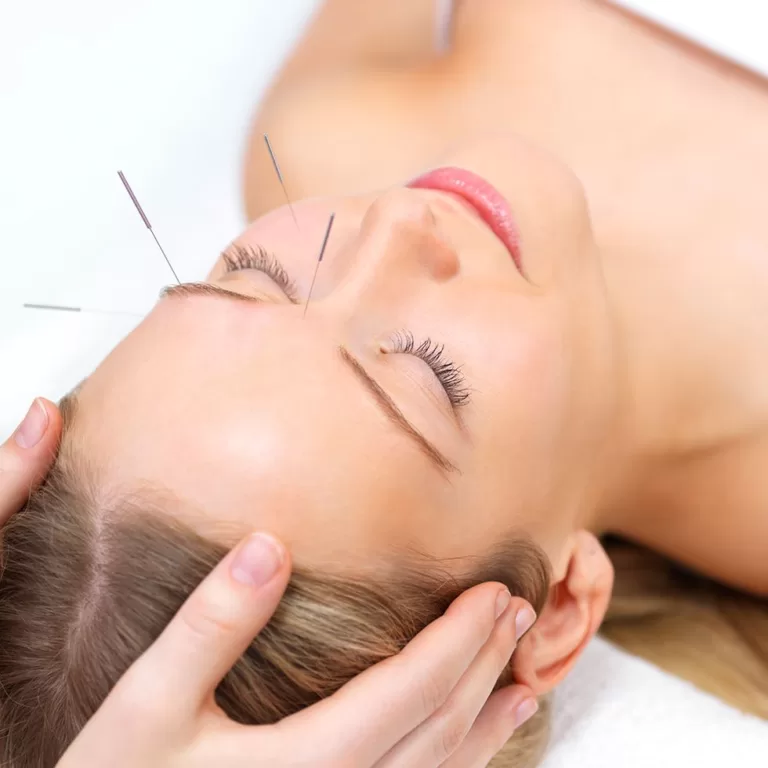
This is the foundation of Facial Balance Acupuncture.
Facial acupuncture is not done as a "surface technique".
It is guided by a Chinese medicine assessment — because the face is connected to the entire body through meridians, qi and blood.
That is why this treatment works on two levels:
Locally (face): supporting facial tone, circulation, tension release, and skin texture
Systemically (body): regulating the underlying pattern — such as stress load, sleep, digestion, hormonal balance, or long-term depletion
Beauty becomes more natural and lasting when the body is better regulated.
This is why I call it Facial Balance.
A professional note
Facial observation is never used alone.
It is always combined with a full Chinese medicine assessment — including detailed questions, tongue observation, pulse diagnosis, and when appropriate, palpation — to understand the whole pattern.
What happens in a session (90 minutes)
A Facial Balance Acupuncture session usually lasts 90 minutes and includes the following steps:
I begin with facial observation and a short assessment to understand your current pattern and needs.
Gentle facial cleansing to prepare the skin.
Facial meridian massage to support circulation and relieve tension.
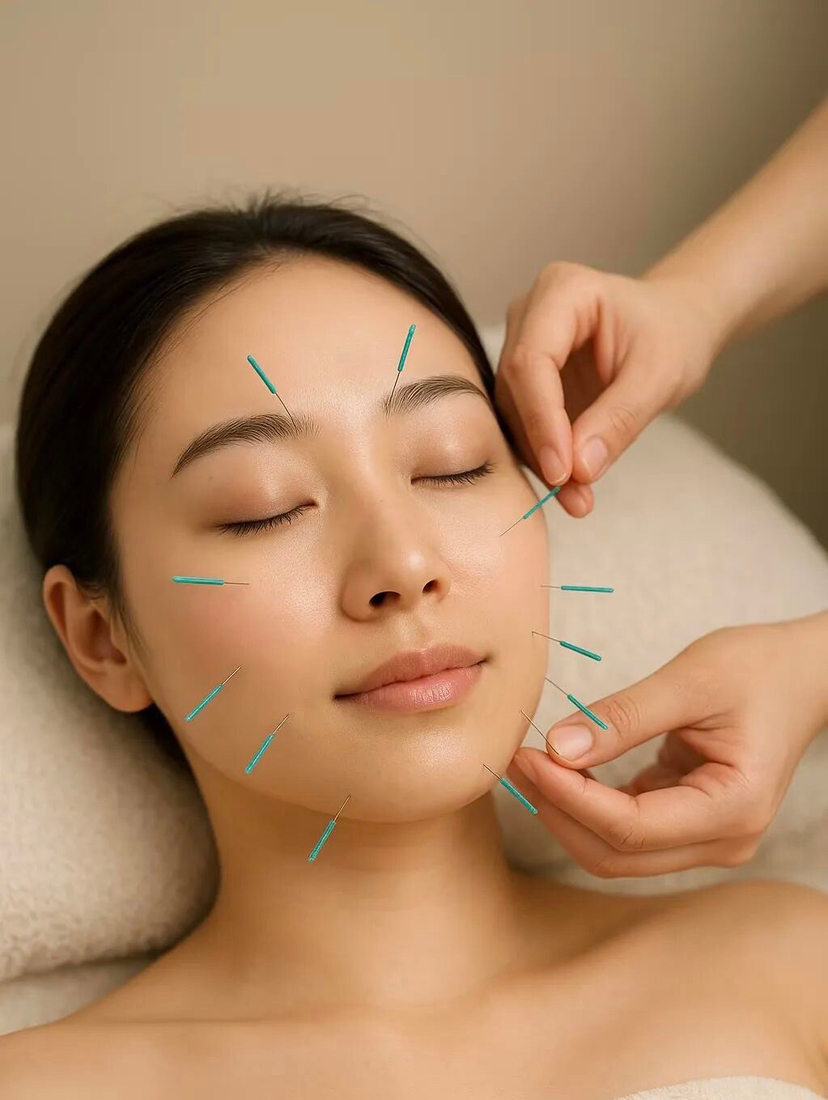
Fine needles are applied to the face and selected body points to support both local effects and whole-body regulation.
Needles are retained for about 20 minutes, allowing the body to settle and respond.
The session ends with a facial mask to nourish and calm the skin.
Before your session
To help you feel comfortable and get the best out of your treatment, please note:
Please avoid coming on an empty stomach or overly full.
Avoid drinking large amounts of water right before your session.
It is best to come without make-up.
Please wear a simple hairstyle that is easy to adjust during treatment.
Wear comfortable clothing that is easy to change in and out of.
During treatment, earrings, necklaces and large jewellery need to be removed.
I use low-sensitivity skincare products whenever possible. If your skin is very sensitive, please bring your own skincare products.
After your session
To support your skin and overall recovery, please follow these suggestions:
Sun protection is important after treatment. Please avoid strong sun exposure and use sunscreen.
Avoid harsh or irritating skincare products for the next days.
Make sure to rest well after your session.
For best results, avoid heavy, greasy or strongly flavoured foods.